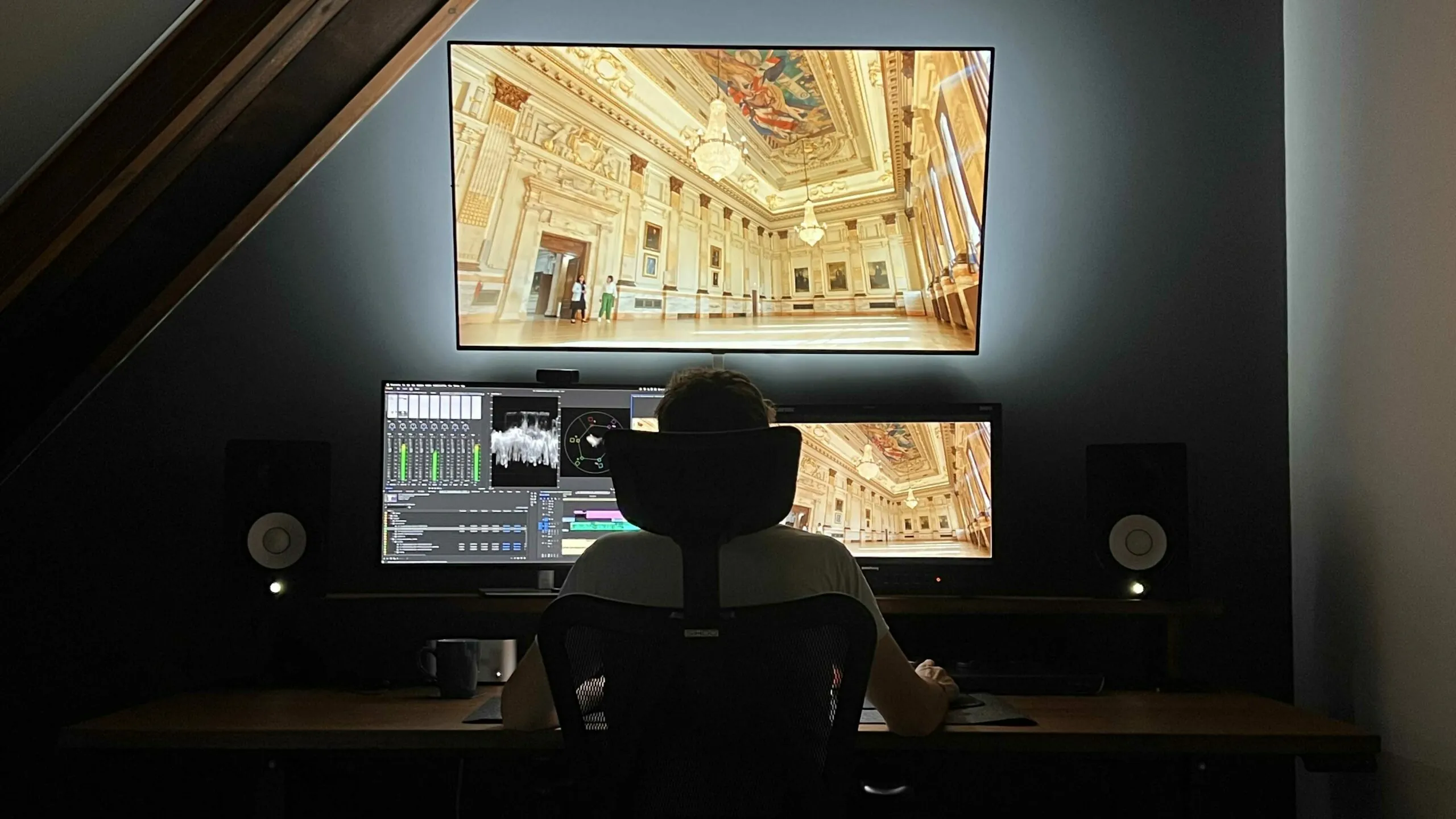
Distributed Production Workflows: The New Industry Standard
%20(5)%20(1).webp)
From location-based production to global workflows
For decades, production was defined by location.
Teams worked in the same building, often in the same room, moving content through a pipeline that was physically contained and predictable. Collaboration was immediate because proximity enabled it. Infrastructure was centralised because it had to be.
That model no longer reflects how modern production works.
Today, creative teams are distributed across cities, countries, and continents. Editors may be in London, VFX artists in Vancouver, colourists in Los Angeles, and producers moving between locations.
This shift toward global collaboration aligns with industry-wide transformation outlined by the MovieLabs 2030 Vision, where cloud-based and distributed workflows are becoming the standard.
Projects are no longer tied to a single facility. They exist across a network of people, systems, and environments.
Distributed production is no longer a temporary shift. It is now the standard.
What is distributed production?
Distributed production workflows are environments where teams, tools, and infrastructure operate across multiple locations while remaining connected through cloud systems and high-performance networks.
In simple terms, distributed production enables teams to collaborate from anywhere while working on the same content in real time or near real time.
This allows:
- Teams to work from anywhere
- Secure access to assets across locations
- Workflows to scale beyond a single facility
- Collaboration across time zones
Why are distributed workflows becoming the standard?
Distributed production unlocks significant advantages.
Studios can access global talent pools instead of being limited by geography. Teams can scale more flexibly. Projects can continue across time zones, effectively extending the working day.
Industry adoption of cloud-based media workflows continues to grow, supported by platforms such as Amazon Web Services Media & Entertainment solutions.
However, these benefits introduce complexity.
When teams are not co-located, communication, access, security, and coordination must be managed deliberately. Without the right systems, workflows become fragmented.
Why do traditional workflows break in a distributed environment?
Many challenges come from applying legacy workflows to modern production environments.
Traditional pipelines assumed:
- Centralised storage
- Local network access
- In-person review sessions
- Direct communication
When these assumptions no longer hold, inefficiencies appear.
Files take longer to move. Access becomes inconsistent. Review becomes fragmented. Security risks increase as content moves across environments.
Workflows that functioned well within a single facility struggle when extended globally.
Why is connectivity critical in distributed production?
At the core of distributed workflows is connectivity.
If teams cannot access the same assets, at the same quality, at the same time, collaboration breaks down. Delays in access directly affect production timelines.
Sohonet Media Network provides dedicated connectivity designed for media workflows. It enables consistent, low latency access between studios, cloud environments, and remote teams.
Connectivity is not just technical infrastructure. It is the foundation of collaboration.
What infrastructure is needed beyond connectivity?
Connectivity alone is not enough.
Distributed production also requires:
- Secure access to assets
- Scalable cloud infrastructure
- Reliable file movement
- Integrated workflows across production stages
When these elements are fragmented, complexity increases.
Media Fabric addresses this by combining connectivity, cloud access, security, file transfer, and workflow orchestration into a single managed environment.
This allows production to scale globally while maintaining consistency.
How do teams maintain creative alignment remotely?
Maintaining alignment is one of the biggest challenges in distributed production.
In co-located environments, alignment happens naturally through real-time interaction. In distributed workflows, this must be recreated through systems.
Without alignment, teams experience:
- Delayed feedback
- Miscommunication
- Excessive iterations
This issue is most visible during review.
How can teams recreate the in-room review experience?
Review is one of the most critical stages in production and one of the most affected by distribution.
When teams cannot review content together in real time, decision-making slows and feedback becomes fragmented.
ClearView Flex enables real-time, frame-accurate review across locations. Teams can watch content simultaneously, discuss instantly, and make decisions together.
This recreates the in-room experience while maintaining the flexibility of distributed production.
Why is file movement central to distributed workflows?
Distributed production depends on efficient file movement.
Large media files must move quickly and securely across locations. Delays create bottlenecks that affect the entire workflow.
Global data volumes continue to increase rapidly, putting pressure on infrastructure, as reported by International Data Corporation.
FileRunner enables fast, secure, and trackable file transfers. It reduces delays, minimises duplication, and ensures teams always have access to the content they need.
How do connected workflows improve distributed production?
The success of distributed production depends on integration.
When connectivity, infrastructure, file movement, asset management, and review operate separately, complexity increases.
When they are connected, workflows become more efficient.
Media Fabric provides the infrastructure.
Sohonet Media Network enables global connectivity.
FileRunner ensures efficient file movement.
ClearView Flex enables real-time collaboration.
Together, they create workflows that are scalable, connected, and efficient.
FAQ: Distributed production workflows
What are distributed production workflows?
Distributed production workflows are production environments where teams collaborate across multiple locations using cloud systems and connected infrastructure.
Why are distributed workflows important?
They allow studios to access global talent, scale operations, and maintain flexibility while working across locations and time zones.
What are the main challenges of distributed production?
Key challenges include maintaining alignment, managing file movement, ensuring secure access, and integrating systems across locations.
How do teams collaborate effectively in distributed workflows?
Teams collaborate effectively by using real-time review tools, centralised asset management, and connected infrastructure that provides visibility across workflows.
Is distributed production the future of the industry?
Distributed production is already the standard and will continue to grow as workflows become more global and cloud-based.
Final thoughts
Distributed production changes more than where people work. It changes how workflows are designed, how teams collaborate, and how decisions are made.
The challenge is not enabling remote work. It is building systems that allow distributed teams to operate with the same efficiency and clarity as co-located teams.
In 2026, distributed production is no longer an alternative approach. It is the foundation of modern media workflows.
Explore further
Explore how Media Fabric, Sohonet Media Network, FileRunner, and ClearView Flex work together to power secure, connected distributed production workflows, enabling global collaboration, seamless file movement, and real-time, frame-accurate review across teams and locations.

Get the latest news and updates from Sohonet in your inbox
.png)
.webp)