Why Point Solutions Are Breaking Production Workflows
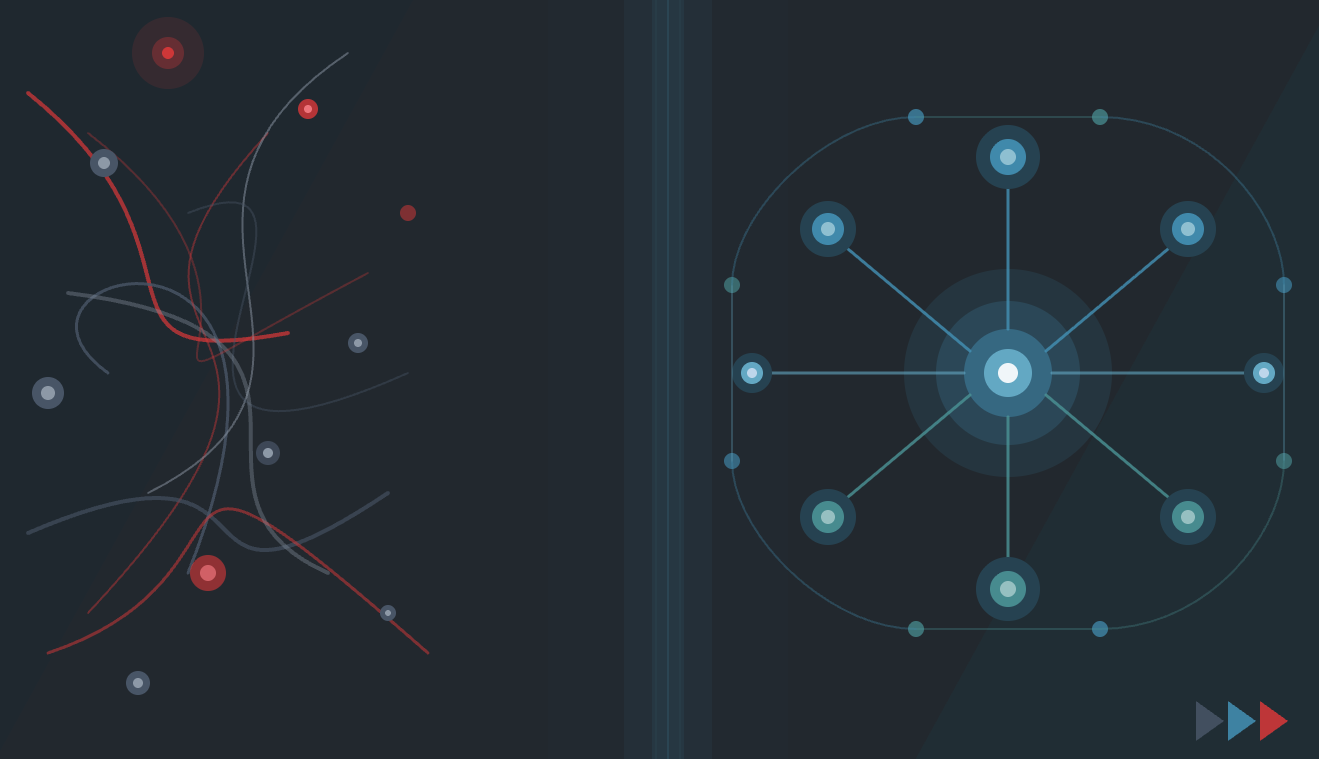
The rise of tool sprawl in modern production
Over the past decade, media production has seen a rapid expansion in tools.
Each new challenge has been met with a new solution. A tool for file transfer. A platform for asset management. A system for review. A service for cloud access. A layer for security. Another for collaboration.
Individually, these tools solve real problems.
Collectively, they introduce a new one.
Workflows that were once linear and contained have become fragmented across multiple systems, each with its own interface, logic, and limitations. Instead of simplifying production, this accumulation of tools has created complexity.
Teams are no longer just managing content. They are managing the connections between the tools that handle that content.
From solutions to fragmentation
Point solutions are designed to address specific needs. They are often highly effective within their defined scope.
The problem arises when they are combined.
In a typical modern workflow, different stages of production rely on different tools. Files are created in one system, transferred through another, reviewed in a third, and stored in a fourth. Each transition introduces friction.
Data must be moved, re uploaded, or reformatted. Context is lost between systems. Visibility becomes limited. Processes that should be continuous become segmented.
Over time, this creates a workflow that is not unified, but stitched together.
Stitched workflows do not scale.
The hidden cost of fragmented workflows
Fragmentation affects more than efficiency. It impacts how teams work, how decisions are made, and how projects progress.
When workflows are split across multiple tools, teams spend more time navigating systems than focusing on creative work. Information becomes siloed. Communication becomes disconnected from the content itself.
This leads to:
- Delays caused by switching between tools
- Errors from inconsistent data or versions
- Duplication of work across systems
- Reduced visibility into the workflow
Most importantly, it reduces momentum.
Instead of moving smoothly from one stage to the next, projects advance in stops and starts.
Why integration alone is not enough
Many organisations try to solve this problem through integration.
APIs are used to connect tools. Workflows are mapped across systems. Processes are designed to bridge gaps between platforms.
This reduces some friction, but it does not solve the problem.
Integration connects tools. It does not unify them.
Each system still operates independently, with its own rules and limitations. When one tool changes, integrations must be updated. When workflows evolve, connections must be reconfigured.
This creates additional complexity on top of an already complex system.
The result is dependency, not simplicity.
Infrastructure as a different approach
To move beyond fragmentation, production workflows need a different approach.
Not more tools. Not more integrations.
Infrastructure.
Infrastructure creates a foundation that supports the entire production workflow rather than solving isolated problems. It enables what is often referred to as production workflow infrastructure or unified media infrastructure.
Instead of:
Multiple tools connected together
It provides:
A unified environment where workflows operate consistently
Workflows become continuous instead of segmented. Data stays connected across the pipeline. Teams work within a shared system rather than across disconnected platforms.
Why infrastructure matters in modern production
Modern production is complex.
Teams are distributed. Workflows are cloud based. Content volumes are increasing. Security requirements are stricter. Delivery timelines are tighter.
In this environment, fragmentation is not just inefficient. It is unsustainable.
Infrastructure provides:
- Consistency across workflows
- Visibility across the pipeline
- Scalability as projects grow
- Reliability across environments
It allows teams to focus on production instead of coordination.
Media Fabric: a unified infrastructure for media workflows
Media Fabric is a fully managed infrastructure layer designed for modern media workflows. It brings together connectivity, cloud access, security, file transfer, and collaboration into a single unified system.
Instead of relying on multiple vendors and tools, teams operate within one environment where:
- Assets are accessible across locations
- Files move efficiently without manual steps
- Security is consistent across workflows
- Collaboration happens in real time
This transforms workflows from stitched systems into connected workflows by design.
Supporting workflows within a unified system
Within this infrastructure, individual capabilities still matter, but they are no longer isolated.
Asset management becomes more effective when it is connected. Platforms like Core provide centralised visibility and version control so teams always work on the correct assets.
File transfer becomes more efficient when it is integrated. Tools like FileRunner enable fast, secure, and trackable media file transfer without adding complexity.
Review becomes more aligned when it is part of the same workflow. Solutions like ClearView Flex enable real time collaboration with frame accurate playback.
Each capability adds value, but infrastructure is what connects them.
From tool management to workflow enablement
Moving from point solutions to infrastructure changes how teams operate.
Instead of asking:
Which tool do we use?
Teams focus on:
How does the workflow operate end to end?
This reduces complexity and improves efficiency. It also creates more resilient workflows that can adapt without constant reconfiguration.
The strategic advantage of unified infrastructure
In an industry where speed, scale, and quality matter, infrastructure creates a clear advantage.
Teams with unified workflows can:
- Deliver content faster
- Maintain consistency across projects
- Scale operations efficiently
- Reduce operational risk
Teams relying on fragmented systems will continue to face limitations regardless of how advanced individual tools are.
Final thoughts
Point solutions are not the problem on their own.
The problem is what happens when too many are combined without a unified foundation.
Modern production does not need more tools. It needs better workflows.
That means moving from fragmentation to infrastructure.
From disconnected systems to unified environments.
From managing tools to enabling production.
FAQ
What is a point solution in media workflows?
A point solution is a tool designed to solve a specific task such as file transfer, asset management, or review. While effective individually, multiple point solutions can create fragmented workflows when used together.
Why are point solutions a problem in production workflows?
They create fragmentation. Each tool operates independently, leading to inefficiencies, data silos, and lack of visibility across the workflow.
What is production workflow infrastructure?
Production workflow infrastructure is a unified system that supports the entire media pipeline, connecting tools, data, and teams into a single environment.
What is unified media infrastructure?
Unified media infrastructure brings together connectivity, storage, security, file transfer, and collaboration into one integrated platform, eliminating the need for multiple disconnected tools.
How does Media Fabric solve workflow fragmentation?
Media Fabric provides a fully managed infrastructure layer that integrates all key workflow components into a single system, enabling seamless collaboration, consistent security, and efficient media file transfer.
CTA
Explore how Media Fabric, Core, FileRunner, and ClearView Flex replace fragmented point solutions with unified production workflow infrastructure, enabling seamless collaboration, centralised asset management, secure media file transfer, and real time review across your entire pipeline.

Get the latest news and updates from Sohonet in your inbox
.png)
.webp)