Crafting the Contenders: Inside Oscar-Nominated Sinners with Kostas Theodosiou

For more than four decades, Kostas Theodosiou has been shaping the final image of major motion pictures from his grading suite at FotoKem. From the days of film timers and Hazeltine color analyzers to modern HDR workflows and large-format IMAX film-outs, his career spans the full evolution of motion picture finishing. Yet his philosophy remains rooted in the discipline of traditional film timing: red, green, blue, and density.
“We’re here to make sure that the vision of the director and cinematographer is delivered to screen,” he says simply. “That’s the job.”
On over 500 titles, spanning photochemical and digital eras, Theodosiou has collaborated with some of the film industry’s most talented filmmakers including Steven Spielberg, Christopher Nolan, Paul Thomas Anderson and Ryan Coogler along with cinematographers Hoyte van Hoytema, ASC, Autumn Durald Arkapaw ASC and Wally Pfister ASC. His many credits include Oppenheimer, The Dark Knight, Sinners and Jonathan Nolan’s streaming series Fallout. His remastering titles include such classics as Patton, the 1930’s All Quiet on The Western Front, and Steven Spielberg’s first four Indiana Jones movies, Saving Private Ryan, The Color Purple and Empire of the Sun.
This accumulated knowledge stems from an early passion for photography. But when he arrived in America in the 1980s he didn’t know how to channel this into a career.

Finding the craft
“Fortunately, an opportunity at FotoKem opened up,” he reflects. “I started at the very bottom — assembling film, cleaning negative, putting on leaders.” In the lab at FotoKem, the trainee found himself surrounded by the photochemical process.
“I spent as much time as I could watching the film timers work. You had to understand the stock, the filters, and how the negative would translate through the full chain from negative to interpositive, interpositive to internegative, and then to print. Every time film goes through a photochemical generation, light and density change. You had to anticipate that.”
Film timing to telecine
Theodosiou remembers when FotoKem took possession of its first telecine - a Rank Cintel Mark II. While these giant, expensive machines were hugely limited relative to today’s systems, Theodosiou was fascinated by the idea of seeing results instantly rather than waiting for film processing.
“You had joysticks for RGB correction, very little power, and everything was transferred directly from negative. If you tried to grade from an interpositive or print, the telecine simply didn’t have enough dynamic range to produce a strong image. Nonetheless the fundamentals were identical. You could see how electronic color correction translated from traditional film timing principles.”
That core philosophy holds for every iteration of color technology since. Even on current projects, Theodosiou starts with primaries - just like printer lights.
“In the early digital days, you’d do primary correction in telecine and then send the material to a separate system like a Quantel or Flame for visual effects. The grading systems didn’t have the power to do much more.
“With the arrival of software-based systems everything opened up. Suddenly, there was no begging for an extra power window or defocus board. You could layer corrections, build mattes, refine highlights, and integrate effects in a single environment.”
Respect the negative
One of the most impressive aspects of modern software grading, he explains, is the ability to fine-tune color responses to match historical print stocks.
“When restoring films from the 1960s, ’70s, or ’80s, you often don’t have a reference. You’re working from logarithmic scans of the negative and you have to build a proper lookup table (LUT) that emulates the print stock used at the time to approximate what was originally seen in theaters. Understanding how vintage stocks behaved - their contrast curves, color biases, and density roll-offs — is essential to achieving authenticity.”
Christopher Nolan’s workflow presents a different kind of rigor. The colorist first worked with the director on Memento then Insomnia, Inception, The Dark Knight, The Dark Knight Rises and Oppenheimer.
Theodosiou notes “Film is the Bible,” for Nolan. “He cuts original negative and the digital grade must match the photochemical result precisely.”
Theodosiou uses a 70mm projector to run a film print alongside the digital image in a butterfly split-screen comparison. First, he performs a full printer-light pass. Then the film print is projected and matched shot-for-shot in digital. Finally, trims are applied.
For Oppenheimer, he also created both black-and-white and color imagery that matched seamlessly across different stocks and formats.
“It’s a heavy workflow. But I want the director to know that what they see digitally will look the same in IMAX. The pipeline is built to match the exact elements.”
Instinctual collaboration
While technical knowledge runs deep, the reputation of a colorist and their ability to score repeat business, depends equally on interpersonal skill.
Over the years, Theodosiou has built long-standing relationships with DPs and directors — some from independent films like Nolan who went on to create major studio features.
“I’ve worked with many cinematographers at the start of their careers on indie films, music videos, and commercials. That builds an understanding and later, when they come into the room, I often already understand their visual language,” he shares.
“My role is to reproduce their vision and to offer ideas that push beyond what they may have thought possible. At all times, I protect the image from going too far. The goal is always to create something unique without breaking the integrity of what was captured.”
The complex workflow for Sinners
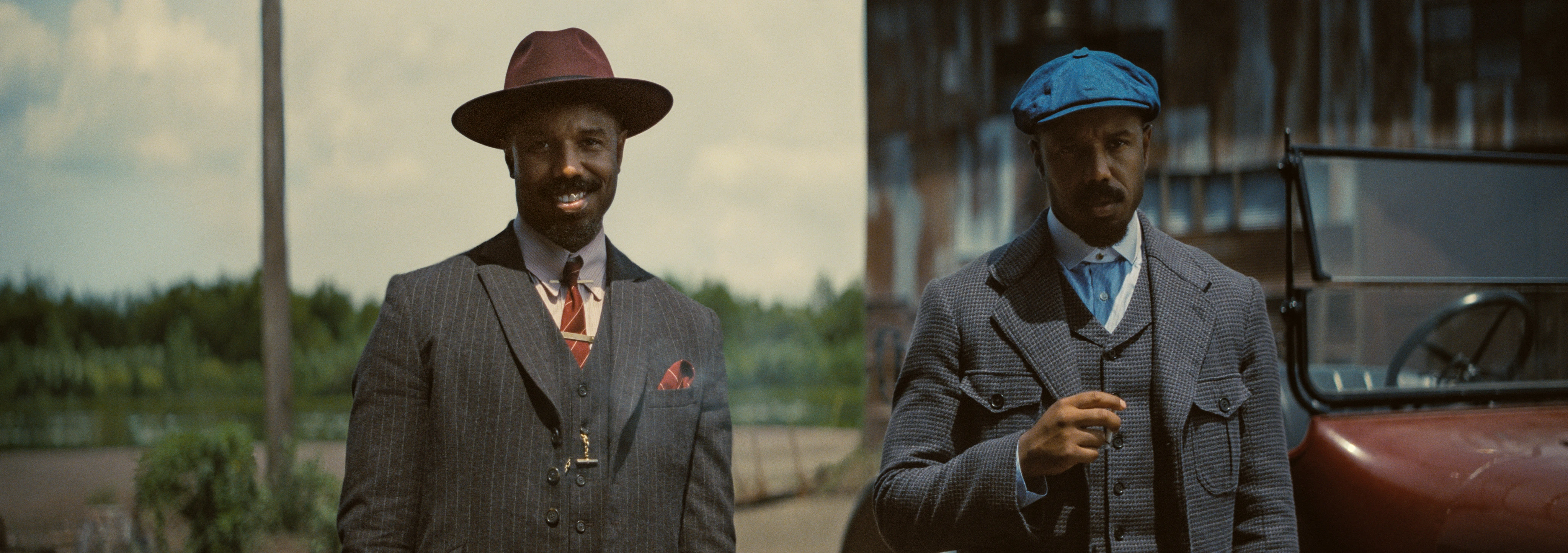
Among his latest collaborations is the multi-award winning and record-setting Oscar® nominated Sinners. Written and directed by Ryan Coogler and lensed by Autumn Durald Arkapaw ASC the workflow for the Warner Bros. picture was particularly complex.
Sinners used dual formats — 65mm 5-perf and 15-perf IMAX — with deliverables that included IMAX film prints, digital cinema, and Dolby Vision HDR.
“We had to think about the end from the beginning,” Theodosiou explains. “When I know a film is going back out to film, I stay as true as possible to traditional film timing. The majority of the correction is printer lights.”
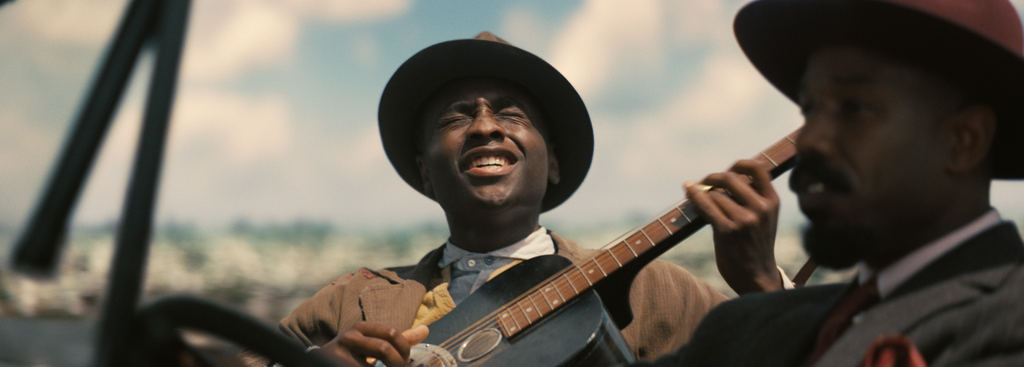
He had previously worked with Durald Arkapaw on The Last Showgirl (directed by Gia Coppola) which was shot on 16mm. Now, working with FotoKem color scientist Joseph Slomka, Theodosiou developed a custom LUT during camera tests. After reviewing the first dailies, they refined it further in the DI.
“Our goal was naturalism. Ryan and Autumn wanted to preserve the warm interior lighting and maintain smoke and atmospheric depth. I took care to avoid excessive contrast or unnecessary secondary keys.”
Because the two formats had to be combined — including sequences that expanded vertically in IMAX — the final master was recorded out to a new negative. This required precise testing: digital grade to film-out, projected and reviewed, then trimmed again to ensure seamless translation.
“Autumn wanted to be brave with darkness and underexposure. The quality of the black level was important to her, as were the various skin tones of the diverse cast, which she wanted to look radiant and have depth.”
Recognition of the craft
Despite being the final stop in the image pipeline, colorists have historically received little public recognition.
“For years, there wasn’t even a colorist category on IMDb. We were listed under editorial or visual effects.”
There is a groundswell of belief that the craft deserves awards recognition comparable to sound mixing, VFX or cinematography.“ We’re the last stop before the film goes out into the world. We’re the ones massaging the image, making sure it’s seamless from beginning to end.
“Every project is custom,” Theodosiou says. “That includes episodic television or a three-hour movie shot in multiple formats or with multiple cameras. Especially with digital, when every camera under the sun can do different things, it is up to the colorist to devise a recipe that will unify them all. We may be using two Kodak color stocks as we did on Sinners but they are different stock and they have to match.”
Back in the era of telecine, the profession was tiny, with maybe 3,000 color graders worldwide. Today, software tools have democratized the process and there are many online tutorials available to demystify the craft but mastery remains rare.
After forty years at FotoKem, from cleaning negative to grading major studio features, Kostas Theodosiou remains — at heart — a film timer. Only now, his printer lights exist inside a far more powerful box.
.png)
Sohonet is proud to work with the industry’s most talented artists and be part of the workflow for so many award-winning projects.

Get the latest news and updates from Sohonet in your inbox
.webp)