Inside Euphoria’s Editorial Heart: Aaron I. Butler, ACE on craft, collaboration and controlled madness

.webp)
“Our priority was making the best, most powerful, most meaningful story possible,” says Aaron I. Butler, ACE, of shaping the fever dream intensity of Euphoria. The HBO drama’s unflinching look at underage sex, drugs, and loneliness is one of television’s most visually and emotionally ambitious shows, created/written/directed by Sam Levinson and shaped by its editorial team into a multi-award-winning phenomenon.
Season 3 alone shot 348 hours of footage, largely on 65mm film, which the editorial team compressed into nine hours of television. “That’s a crazy ratio,” Butler says. “We like to play with and push the material to see where we can take it.”
Joining the Euphoria family
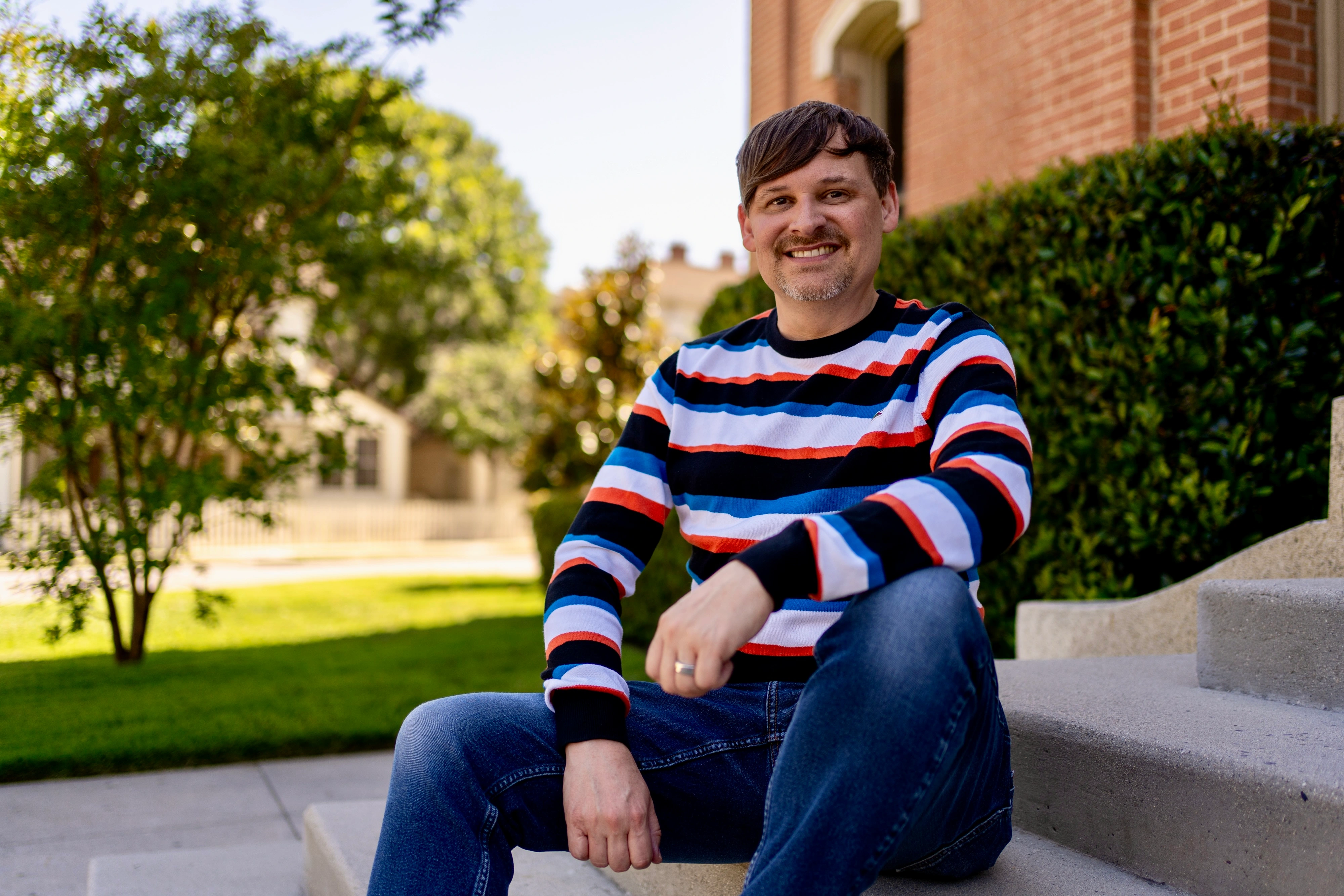
Butler is a six-time Emmy Award-nominated, two-time Emmy Award-winning, and three-time ACE Eddie Award-nominated editor and PGA Award nominated producer who joined Euphoria in its second season.
He first met the show’s Supervising Editor Julio Perez IV, ACE, Levinson’s longtime collaborator, at a diner. They talked for two and a half hours straight and ended with a hug.
“We were instant friends,” he recalls. “We went right to the deep emotional stuff. We both had family trauma. Both our parents struggled with addiction. For a show like Euphoria, that’s important. It’s emotional and raw, and you have to be able to talk about these difficult subjects.”
That shared emotional vocabulary became foundational across the editing team for season 2, who together won the Primetime Emmy for Outstanding Single-Camera Picture Editing for a Drama Series for the episode ‘The Theater and Its Double’.
For Season 3’s eight episodes, all 4 editors are credited on every episode (this season’s editors include Perez IV, Butler, Aleshka Ferrero and Nikola Boyanov), which is unusual for a tv series. They worked as a collective, responding to footage as it arrived. Part of the reason was practical too because the whole season was shot as one big block.
.webp)
A collaborative editing culture
Perez acted as Levinson’s proxy while the show runner was on set. Butler explains, “Julio watches everything. It all gets in his head. Sometimes he’ll do selects, sometimes he’ll assign scenes based on who he thinks is right for them. Other times I’ll say, ‘Julio, I really want to do this scene.’”
Once an editor finished a first pass, they screened with Perez, then with the entire team. “Usually once a week we’d get together, all the editors, and watch everything. We’d give each other feedback. We’d see how the scenes were playing into each other. It’s incredibly collaborative.”
This collaboration extended to Levinson himself. “Sam will come in during shooting and watch scenes we’ve cut. That’s very unusual. Most show runners don’t watch anything until there’s a first assembly of an entire episode.” Levinson, however, uses editorial as part of his creative process. “He’ll rewrite things, add things, or shoot different things based on what we do. Editorial and production are informing and inspiring each other along the way.”
Butler calls it “a unique kind of editorial process,” one that demands flexibility, experimentation, and trust.
Finding the style in the finale
Season 3 brought a major stylistic shift and a five-year time jump. “We like to have the footage come in and affect us,” Butler says. “We sat together listening to music — Western themes, Mexican cowboy music, old Hollywood noir. We were trying to feel the world of this season.”
Once the dailies started arriving, instinct took over. “We react to it and see how the characters have changed.”
The season 3 finale ‘In God We Trust’, which is Emmy-nominated for Outstanding Picture Editing For A Drama Series, is a feature length 93 minutes. It was the first episode the team completed. “Creatively, that’s not a bad thing,” Butler says. “You know where everything is headed.”
His biggest challenge was the Ali–Alamo duel, a sprawling, multi-character sequence inside a strip club. “It was a huge amount of footage and a really complicated sequence,” he says. “You’re in this room with two people having a duel, but there are all these other people in the room. Preserving the sense of space, being on the right person at the right time, was a complex dance.”
Levinson later told him it was the scene he was most excited to shoot and that Butler’s cut surprised him. In the script, Alamo (Adewale Akinnuoye-Agbaje) fires early, discovers his gun is empty, curses Bishop (Darrell Britt-Gibson), and then Butler was expected to cut to Ali (Colman Domingo) raising his gun before shooting him. “I cut it that way first,” Butler says. “But I thought, there’s something I can do here to make it even better.”
Instead of showing Ali raise his gun, Butler cut straight from Alamo’s curse to Alamo getting blasted with Ali’s gunshot. “I cut it so that the shot comes out of nowhere. The audience isn’t expecting it.” Levinson was totally surprised when he saw the first cut of the scene. During a 600 person New York screening of the finale, when Alamo gets suddenly shot, Butler says, “The theatre just gasped. Then everyone screamed and cheered. That made me feel like mission accomplished.”
Documentary instincts
Butler’s documentary background is central to his approach. “In documentary, the editor is the writer,” he says. “You have 300+ hours of footage and you’re literally writing the story line by line.”
That mindset shapes his scripted work. “A good scripted editor will cut the scene as written. But a really good editor - especially one with documentary experience - doesn’t stop there. You ask ‘how can I make it even better? How can I elevate this?’”
He offers an example from Season 3 where Ali and Natasha Lyonne’s character are shadowboxing in a drugged-out haze. “Sam shot it like a mini-doc. They were just playing.” The scripted transition cut from their drugged chaos to Ali waking in a hospital bed after heart surgery. Butler felt the cut needed more escalation.
“I thought: addiction feels like fighting yourself. My parents struggled with addiction. I saw them constantly in this internal battle.” So he found one random shot in the footage where Ali fell down on the hotel bed. Then he recut the shadowboxing footage so Ali starts punching himself in the face and then knocks himself out and then falls into the hotel bed (“a symbolic collapse”). Then it cuts right to Ali in the hospital bed, his chest full of stitches. “Sam never expected that. Julio said it was so innovative. The audience will never know it wasn’t scripted that way.”
The Idol
If Euphoria blends scripted precision with improvisational looseness, The Idol leaned almost entirely into chaos. “The biggest difference is that Euphoria had eight scripts. On The Idol, we had two full scripts. The rest was outlined.” Levinson received the project late, Butler says, and time was short.
“The Idol was shot like a documentary. They’d throw the actors in a room and just shoot. Sometimes we had four hours of footage for a two-minute scene.” Scenes moved all over the place.
“It was all made in the edit room,” he notes. “But all of the editors had documentary experience. That’s why we could do it.”
.webp)
A life built for storytelling
Butler’s path into filmmaking began on a small ranch in Atascadero, California. “My escape was going out into the fields with my dog and making up stories in my head,” he says. He loved movies and books, especially fantasy and science fiction.
His first spark came in seventh grade, when he wrote a creative story for English class inspired by a rose growing outside his bedroom window. It was so accomplished, his teacher accused him of plagiarism. “She said, ‘There’s no way you wrote this.’ It really crushed me.” Despite his parents showing the teacher the drafts he had made she didn’t believe him. “I didn’t want to be an artist after that.”
But what doesn’t break you makes you stronger. Butler’s father bought him a Hi8 video camera. “I fell in love with making little short films. My friends were blown away. I loved making them laugh. I got addicted to it.”
At UC Berkeley, he studied pre-law and theatre but kept making films. “I got a little cult following,” he says. That led him to the Saul Zaentz Film Center in 1997, where he edited his first documentary Learning to Fly with two-time Academy Award-nominated director Bill Jersey. The film won Gold Medals at the New York Festivals and U.S. International Film Festival and aired on PBS. In 2002 Aaron edited on Jersey's documentary series The Rise and Fall of Jim Crow, which won the Peabody award, the IDA Award for Best Limited Series, and was nominated for three Emmy Awards.
Other projects he has edited include the 2013 HBO documentary feature American Winter, the Sundance and HBO documentary Cries From Syria, the IMAX short film Jesus is King for Kanye West, the Sundance feature I Am Michael starring James Franco, and the Toronto International Film Festival feature J.T. LeRoy starring Kristen Stewart and Laura Dern, which was the closing night film in 2018.
Whatever the project, Butler approaches every scene the same way, with curiosity, empathy, and a desire to surprise. “How can I add layers of meaning?” he says. “How can I elevate this? How can I make the audience feel something deeper?”

Get the latest news and updates from Sohonet in your inbox
.webp)